

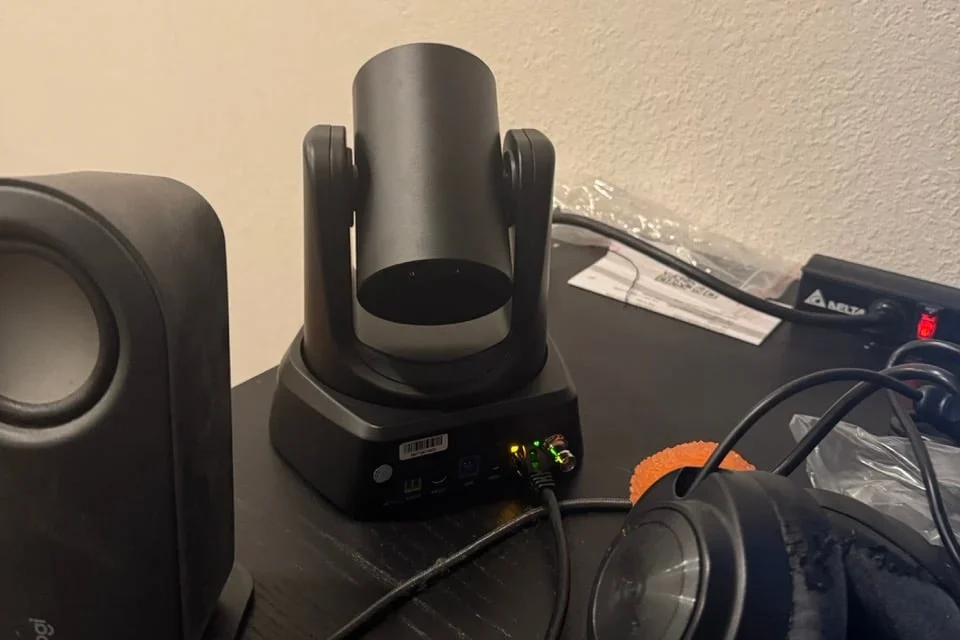
Living under the flight path of a major international airport is often considered a logistical nuisance, characterized by the persistent roar of jet engines and the rattling of windowpanes. However, for Cameron Paczek, a San Francisco-based maker and software engineer, the constant overhead transit of San Francisco International Airport (SFO) departures became the catalyst for a groundbreaking fusion of hardware engineering, computer vision, and interior design.
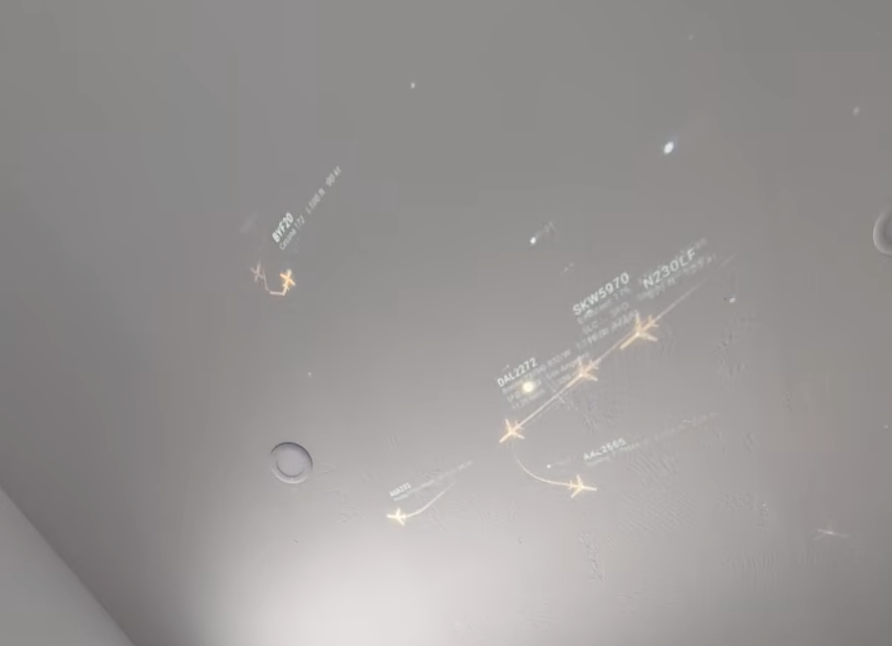
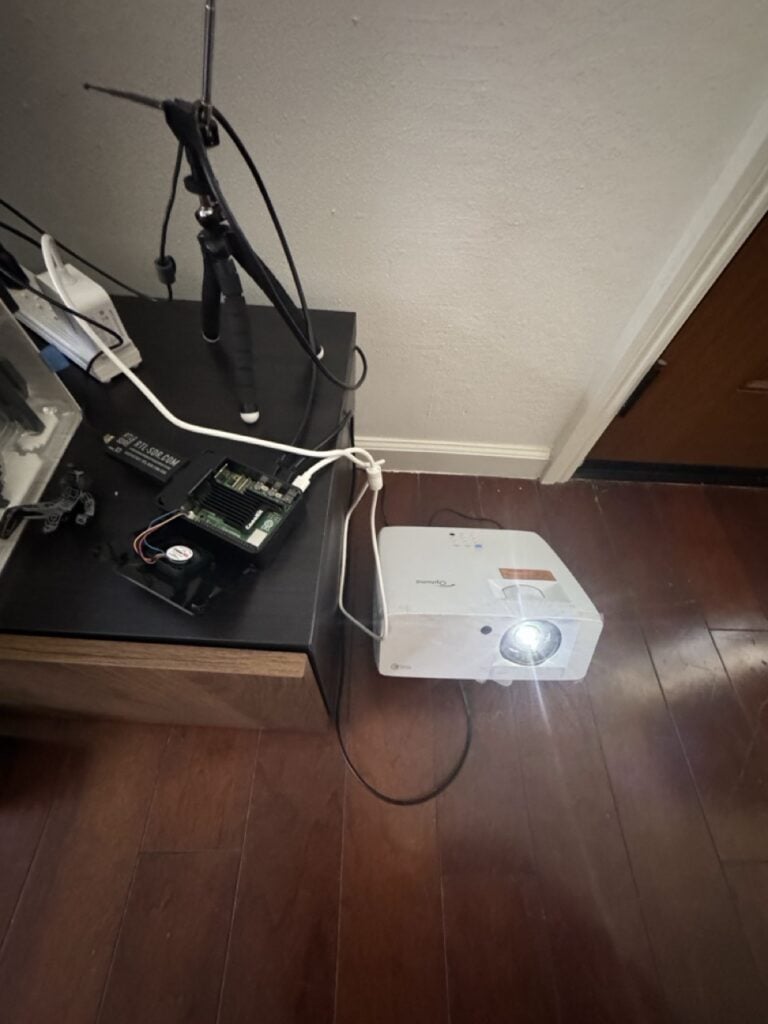
Paczek’s project, titled "Skylight," utilizes a Raspberry Pi 5, software-defined radio (SDR), and projection mapping to visualize the invisible data streams of the aviation world directly onto his living room ceiling. By combining real-time flight telemetry with automated camera tracking, Paczek has created a seamless "digital twin" of the airspace above his home, effectively bringing the sky indoors.
Main Facts: The Architecture of an Indoor Airspace
The "Skylight" system is a multi-layered technological stack that bridges the gap between raw radio frequency (RF) data and aesthetic visual representation. At its core, the project addresses a common frustration for aviation enthusiasts: the "missed glimpse." When a heavy aircraft—such as a Boeing 777 or an Airbus A350—climbs out of SFO, it passes over Paczek’s residence at altitudes as low as 600 to 800 feet. By the time the sound reaches the ground and a resident steps outside, the aircraft is often obscured by clouds or has already passed the optimal viewing angle.
To solve this, Paczek developed a system with three primary functional objectives:
- Data Acquisition: Capturing Automatic Dependent Surveillance-Broadcast (ADS-B) signals directly from aircraft.
- Visual Projection: Mapping the aircraft’s relative position onto a ceiling canvas to show where the plane is in real-time.
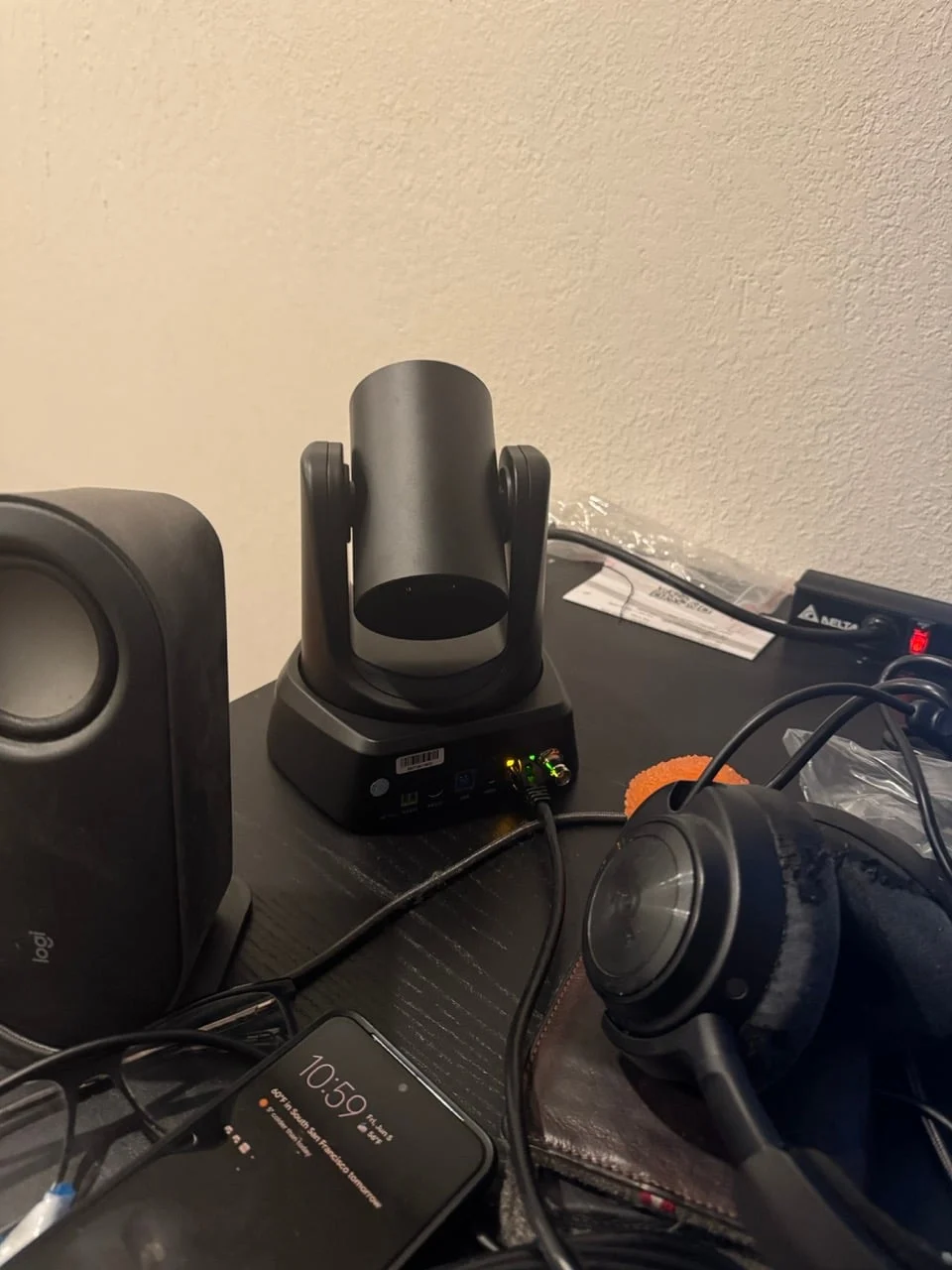
- Automated Surveillance: Using a Pan-Tilt-Zoom (PTZ) camera and artificial intelligence to visually track and zoom in on the aircraft, streaming the live feed to a television.
The hardware relies on the recently released Raspberry Pi 5, which provides the necessary computational overhead to handle simultaneous data processing, video streaming, and AI-driven object detection.
Chronology: From Noise Complaint to Engineering Feat
The genesis of Skylight was born out of Paczek’s relocation to a neighborhood directly beneath the departure corridor of SFO. The environmental impact was immediate. Every few minutes, during peak departure "pushes," the house would shake, a physical reminder of the massive logistics operation occurring just hundreds of feet above.
Phase I: The Habitual Tracker
Initially, Paczek followed the traditional route of the "planespotter," relying on mobile apps like FlightRadar24. While these services provide excellent global coverage, they often suffer from a slight lag—sometimes up to 10–30 seconds—due to the time required to aggregate data from ground stations to central servers and back to the user’s device. For an aircraft moving at 150–200 knots at a low altitude, a 20-second delay means the plane is no longer where the app says it is.
Phase II: The Projection Mapping Influence
Paczek’s interest was further piqued by the growing "projection mapping" community on TikTok. This niche of digital art involves using projectors to turn everyday objects or architectural features into dynamic displays. He realized that the ceiling of his home was a blank canvas that could serve as a literal map of the sky.
Phase III: The Hardware Build
In early 2024, Paczek began assembling the hardware. He opted for an RTL-SDR (Software Defined Radio) dongle tuned to 1090MHz. This is the universal frequency for ADS-B, the system aircraft use to broadcast their GPS location, altitude, and flight identification. By capturing these signals locally, he eliminated the latency issues of third-party apps.
Phase IV: Integrating Computer Vision
The final and most complex phase involved the integration of a VISCA-enabled PTZ camera. It wasn’t enough to see a dot on the ceiling; Paczek wanted to see the aircraft itself. He implemented YOLOX-Nano, a high-performance object detection model, to refine the camera’s aim. By mid-2024, the system was fully operational, and Paczek open-sourced the code on GitHub, allowing other makers to replicate the setup.
Supporting Data: The Technical Specifications
The sophistication of Skylight lies in its ability to translate complex trigonometry into a user-friendly visual interface.
The ADS-B Backbone
The system listens for 1090MHz "Extended Squitter" messages. Unlike traditional radar, which "pings" an aircraft to find its position, ADS-B is "dependent" because it relies on the aircraft’s own navigation system. This data is unencrypted and public, making it a goldmine for hobbyists. The Raspberry Pi 5 processes these messages using dump1090, a popular tool for SDR enthusiasts.
The Geometry of the Living Room
To project the planes accurately, Paczek had to perform "simple" but precise geometry. The system calculates the distance and bearing of the aircraft relative to the fixed latitude and longitude of his home.
- Input: Aircraft Lat/Long, Home Lat/Long, Aircraft Altitude.
- Processing: The Pi calculates the Azimuth (compass direction) and Elevation (angle from the horizon).
- Output: These coordinates are translated into X/Y coordinates on a digital canvas, which the projector then beams onto the ceiling.
AI-Enhanced Tracking (YOLOX-Nano)
One of the most impressive features is the use of YOLOX-Nano. While the ADS-B data gives the camera a "rough idea" of where to point, GPS drift and mechanical tolerances in the PTZ motor mean the camera might be off by a few degrees. At high zoom levels, a few degrees of error mean the plane is out of frame.
YOLOX-Nano—a "tiny" version of the You Only Look Once (YOLO) object detection algorithm—runs on the Pi 5. It scans the camera’s field of view in real-time, identifies the "box" containing the airplane, and sends correction commands to the camera to keep the aircraft centered.
Official Context and Community Response
While there has been no formal statement from the Federal Aviation Administration (FAA) or SFO airport authorities regarding this specific project, the "Skylight" project exists within a well-defined legal framework.
The Legality of ADS-B Reception
In the United States, receiving ADS-B signals is entirely legal. The FAA actually encourages the proliferation of ADS-B technology as part of its "NextGen" air traffic control modernization program. By 2020, the FAA mandated that most aircraft operating in controlled airspace be equipped with ADS-B Out. Because these signals are broadcast openly for the purpose of collision avoidance and situational awareness, hobbyist reception is a protected and common activity.
The Maker Community
The response from the "Maker" and "Home Lab" communities has been overwhelmingly positive. On platforms like GitHub and Reddit, users have praised Paczek for the "cleanliness" of his implementation. The Raspberry Pi Foundation itself highlighted the project as a premier example of what the Raspberry Pi 5’s improved CPU and GPU can achieve in a home environment.
Implications: The Future of the "Smart Home"
The Skylight project represents a significant shift in the philosophy of the "Smart Home." For the past decade, smart home technology has focused largely on internal metrics: temperature, lighting, and security. Paczek’s work suggests a future where the home is "contextually aware" of the external environment.
1. Augmented Reality Without Glasses
While many tech giants are betting on bulky AR headsets (like the Apple Vision Pro or Meta Quest) to overlay data on the real world, Skylight achieves a form of "Ambient Augmented Reality." By using projection, the data becomes part of the room’s architecture, accessible to everyone in the space without the need for specialized eyewear.
2. Democratization of Surveillance and AI
The fact that a single individual can build a tracking system that rivals professional-grade equipment for a few hundred dollars is a testament to the democratization of technology. Ten years ago, the computer vision required to track a fast-moving object with a PTZ camera would have required a high-end workstation and proprietary software. Today, it runs on a credit-card-sized computer using open-source libraries.
3. Noise Mitigation and Psychological Reframing
There is also a psychological component to the project. By transforming a "disturbance" (airplane noise) into a "feature" (an interactive data display), Paczek has effectively mitigated the negative externalities of living near an airport. The "Skylight" turns a source of stress into a source of curiosity and education.
Conclusion
Cameron Paczek’s "Skylight" is more than just a clever gadget for aviation nerds; it is a masterclass in modern hobbyist engineering. It sits at the intersection of data science, radio frequency engineering, and interior design, proving that with a Raspberry Pi and a bit of ingenuity, the sky is no longer the limit—it is the ceiling. As more makers download his code from GitHub, we may soon see a trend of "transparent" homes that use data to peel back the roof and reveal the hidden patterns of the world above.